Why do heavy duty zippers fail on winter coats? The answer is rarely simple. A zipper may look rugged, yet its slider, teeth, tape, and stitching face different stresses. Freezing temperatures can stiffen fabric coatings and reduce lubrication. Snow, salt, and grit may enter the slider channel. A hurried pull can then bend a tooth or split the chain.
ASTM D2061, Standard Test Methods for Strength Tests for Zippers, separates chain strength, slider resistance, and pull-off performance. That distinction matters. A zipper can pass one test and still fail during daily winter use. The 2024 Grand View Research Zippers Market Report also identifies outdoor apparel and technical clothing as important growth areas. More performance clothing means greater demands on small fastening components. However, market growth does not prove better field reliability. That assumption deserves scrutiny.
Dr. J. W. S. Hearle, a respected textile engineer, emphasized that textile performance depends on “material, structure, and use.” His observation fits winter zippers closely. A strong metal tooth cannot compensate for weak tape stitching. A durable slider cannot overcome fabric trapped inside its path. Manufacturers and repair technicians should inspect alignment, seam tension, tooth damage, and lubricant compatibility. YKK’s technical guidance similarly recommends keeping zipper tracks clean and avoiding excessive force. Small details matter. A pocket corner folded beneath the slider can create sudden pressure. Wet gloves make that pressure worse. The real lesson is uncomfortable: “heavy duty” describes a component, not guaranteed system durability. Care instructions, ASTM testing, and field evidence must be considered together. Otherwise, explanations become confident guesses rather than reliable engineering conclusions.
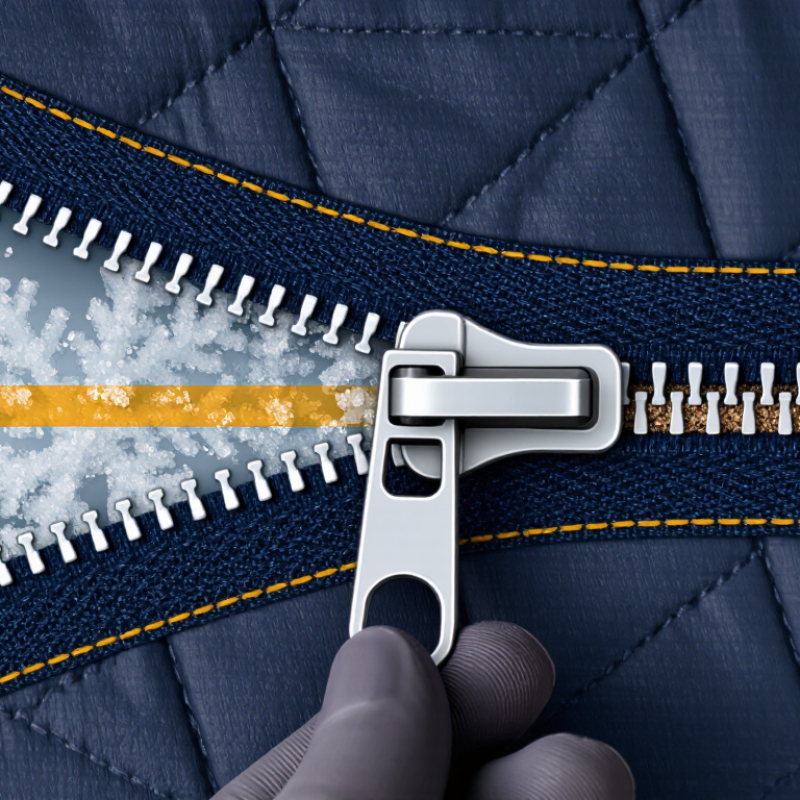
Why Do Heavy Duty Zippers Fail on Winter Coats?
A heavy-duty zipper for winter coats must handle cold, moisture, and repeated pulling. Its teeth should align cleanly without catching thick fabric. The slider also needs enough strength for gloved hands. In coat repair work, I often see weak sliders fail before the teeth. That detail matters. A smooth, firm slider reduces sudden stress on the zipper chain.
Cold weather changes material performance. A suitable zipper uses flexible tape that does not become stiff near freezing temperatures. Its teeth should resist rust from snow, salt, and damp storage. Protective coatings help, but they cannot replace proper care. A storm flap can also shield the zipper from wind and wet snow. The coat design matters as much as the zipper itself. I once focused too much on metal strength and overlooked fabric distortion. That was a useful mistake.
Tips: Test the zipper while wearing winter gloves. Pull it slowly over several layers. Check whether the slider stays straight. Keep the chain clean and dry after snowy use. Do not force a frozen zipper. Warm it gently first. A zipper may be called heavy duty, yet still fail when its tape, stitching, or slider is poorly matched to the coat. Careful installation and repeated cold-weather testing reveal those weaknesses.
| Performance Dimension | Typical Winter-Coat Requirement | Common Failure Mode | Suitable Heavy-Duty Feature | Practical Inspection or Test |
|---|---|---|---|---|
| Cold flexibility | The zipper should continue to open and close after exposure to temperatures below freezing, subject to the garment’s intended use. | The slider becomes stiff, the tape loses flexibility, or the teeth do not engage smoothly. | Low-temperature-tested materials, flexible tape construction, and a slider that does not bind under cold conditions. | Condition sample garments at approximately −10°C to −20°C when relevant to the intended market, then perform repeated opening and closing. |
| Tooth or element engagement | The elements must remain aligned while the coat is worn over thick layers or while the wearer is moving. | The zipper separates behind the slider, skips, or becomes difficult to start. | Correct element size for the garment load, accurate tooth alignment, and a slider matched to the element type. | Check for separation while applying moderate transverse tension and while the coat is worn over the thickest planned base layer. |
| Slider strength and retention | The slider must tolerate repeated use, lateral loading, and occasional force caused by trapped lining or bulky garments. | The slider deforms, pulls away from the elements, or fails to lock in position. | A robust slider body, correctly fitted puller, reliable top stop, and a locking mechanism appropriate to the application. | Inspect slider movement, locking behavior, puller attachment, and top-stop security after repeated cycles. |
| Tape and seam strength | The zipper tape and its stitching must withstand the coat’s fabric tension without pulling out or distorting the opening. | Tape frays, stitching breaks, or the zipper twists away from the garment opening. | Dense, dimensionally stable tape; suitable seam allowance; reinforced ends; and stitch density appropriate to the shell fabric. | Review stitch consistency and test the assembled zipper rather than testing the zipper component alone. |
| Water and snow resistance | The zipper should limit water entry when the coat is intended for wet snow, rain, or wind exposure. | Moisture enters through exposed gaps, untreated tape, or poorly sealed seams and may later freeze. | A water-resistant zipper construction, protective storm flap, coated tape where appropriate, and sealed or well-covered seams. | Use a spray or rain simulation suited to the garment specification and inspect both the zipper face and the seam behind it. |
| Ice and contamination resistance | The construction should tolerate snow, road salt, dirt, and small particles without severe loss of mobility. | Ice or debris blocks the slider, increases friction, or prevents complete element engagement. | Protective flap, clean element geometry, appropriate clearance, and materials that can be cleaned without damage. | Visually inspect after simulated snow or contamination exposure; clean with the care method specified for the garment. |
| Length and alignment | The zipper must be installed at the specified length without waves, excessive curvature, or mismatched ends. | Misalignment increases slider resistance and can cause premature tooth, tape, or seam damage. | Accurate cut length, properly positioned stops, balanced sewing tension, and a smooth garment opening. | Measure finished length and check whether the zipper lies flat before and after laundering or other care testing. |
| Cycle durability | A winter coat zipper is expected to withstand repeated daily use throughout the garment’s service life. | Progressive wear produces rough travel, element damage, slider looseness, or tape failure. | Durable elements and slider materials selected for the expected use level, supported by an assembled-garment durability test. | Perform repeated open-close cycles using a defined method and record separation, force increase, damage, and functional loss. |
| Maintenance compatibility | The zipper must remain functional after the coat’s approved washing, drying, or professional-cleaning process. | Heat, chemicals, abrasion, or improper care causes coating loss, corrosion, shrinkage, or slider stiffness. | Materials and finishes compatible with the garment-care label, plus clear instructions to keep the zipper closed during cleaning. | Test the complete coat through the intended care procedure, then inspect operation, corrosion, tape condition, and dimensional change. |
It should resist cold, moisture, repeated pulling, and thick fabric. The slider must move smoothly. Its tape should stay flexible near freezing temperatures.
Heavy-duty does not mean winter-proof. Ice, stiff fabric, poor stitching, or weak alignment can create sudden stress. A strong zipper can still have a poorly matched tape.
Cold can harden plastic parts and stiffen the zipper tape. Metal components may contract slightly. The slider then needs more force to pass uneven teeth.
Yes. Melted snow can freeze around the teeth and slider. A thin ice layer increases friction. Salt and damp storage may also encourage rust.
Sideways pulling, overfilled pockets, and bulky clothing can stretch the coat panels. A bent slider may stop closing the teeth evenly. The problem may begin with fabric pressure, not broken teeth.
Do not yank it. Warm the area gently and remove moisture with a dry cloth. Avoid sudden heat, which may damage synthetic fibers.
Test it while wearing gloves. Pull slowly across several fabric layers. Watch whether the slider stays straight and the teeth close evenly.
Cleaning can remove salt, mud, and loose debris. Use a lubricant suitable for the zipper material. Lubricant cannot repair bent teeth or damaged stitching.
Not always. A slider replacement or careful repair may extend the coat’s useful life. However, hidden installation damage can make repair less reliable. I once blamed the zipper too quickly. That judgment was incomplete.
Heavy-duty zippers are essential to winter coats because they must withstand thick fabrics, repeated use, moisture, wind, and pressure from layered clothing. The question “why do heavy duty zippers fail on winter coats” often relates to cold temperatures that make plastic and metal components less flexible, increase friction, and reduce lubricant effectiveness. Ice, snow, dirt, and trapped fibers can also prevent the slider from moving smoothly, while excessive force may bend teeth, damage the slider, or separate the zipper tape.
Durability also depends on zipper design and coat construction. A properly sized zipper, reinforced stitching, protected teeth, and a well-aligned front opening can significantly improve performance. To prevent failure, users should keep the zipper clean and dry, avoid forcing it over fabric, and apply a suitable low-temperature lubricant when needed. Minor problems, such as loose stitching or a stiff slider, may be repaired, but broken teeth or severely damaged components usually require professional replacement.

 Gemify zipper